Ryan Kole, CEO & Co-Founder of Beyond Barriers Therapeutics, is developing an intranasal therapy designed to address one of the most persistent challenges in neurological care: treating concussion and traumatic brain injury quickly and effectively.
Beyond Barriers Therapeutics is repurposing a previously FDA-approved drug for intranasal delivery to treat disorders of the central nervous system. Its lead focus is concussion, an area where there is currently no FDA-approved therapeutic treatment.
Kole describes the company’s ambition as creating a “non-invasive EpiPen” for concussion—an accessible treatment that could be administered rapidly following a head injury.
The company’s origins trace back to Northwestern University and the University of Chicago, where Kole and his fellow graduate students participated in and won the National Institutes of Health Neuro Startup Challenge with a technology aimed at reducing the effects of concussion. After joining the National Science Foundation’s I-Corps program, the team pivoted toward intranasal drug delivery.
The scale of the problem convinced them to pursue the opportunity further. Millions of concussions occur in the United States each year, with tens of millions more globally. Many may also go undiagnosed because patients have limited treatment options beyond rest, avoiding screens and bright lights, and temporarily stopping strenuous or contact activity.
Overcoming the Blood-Brain Barrier
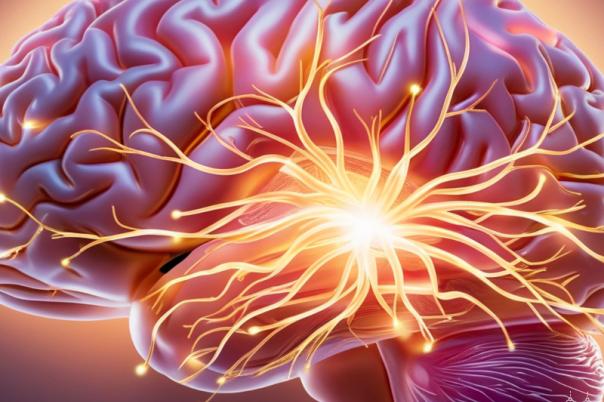
One of the central challenges in treating neurological conditions is the blood-brain barrier, which prevents many drugs from reaching the brain in therapeutically meaningful concentrations.
Beyond Barriers is developing an intranasal formulation of N-acetylcysteine (NAC), with the aim of delivering the drug more effectively than conventional oral administration.
The therapeutic strategy centers on increasing levels of glutathione (GSH), an important antioxidant whose levels can fall following concussion. By restoring glutathione, the company hopes to reduce oxidative stress, inflammation and the cascade of secondary damage that can follow the initial injury.
“We can’t prevent the car accident, the baseball to the head, the fall down the stairs or in the playground,” Kole explained. “But we can prevent that secondary injury.”
Early clinical observations have also shown reductions in symptoms measured using post-concussion symptom scores, according to Kole.
The company is optimizing the formulation specifically for nasal administration, including adjustments to pH and viscosity and the use of excipients and odor-masking technologies. The envisioned treatment regimen would be administered twice daily for approximately seven days following a concussion.
Moving Through Clinical Development
Beyond Barriers is now advancing its clinical program. At the time of the interview, the company was nearing completion of a Phase 1b investigator-initiated trial and had enrolled approximately 21 of a planned 36 subjects in a Phase 2a investigator-initiated study across two clinical sites.
The Phase 2a study is designed as a double-blind, placebo-controlled trial evaluating safety as well as early signs of efficacy.
Beyond these studies, the company expects to advance an updated commercial formulation through additional Phase 1 and Phase 2 development before exploring potential partnerships with larger pharmaceutical or specialty pharmaceutical companies.
While concussion represents its initial target, Kole sees broader potential for the technology. Because NAC is intended to address inflammation and oxidative stress in the brain, Beyond Barriers believes the approach could ultimately have applications across multiple central nervous system disorders.
Seeking Partners to Scale the Opportunity
Beyond Barriers is looking to engage investors, pharmaceutical partners and collaborators with expertise in brain injury, sports medicine and military health.
Military personnel and athletes are particularly important populations because of their elevated exposure to head injuries. But Kole stresses that concussion extends far beyond professional sports or the battlefield. Children, older adults, cyclists and participants in everything from football and hockey to soccer, lacrosse, wrestling and other sports can be affected.
For Beyond Barriers, the long-term goal is therefore broader than developing a treatment for athletes: it is to address what Kole describes as a “silent epidemic” affecting people of all ages.
“We believe we have a solution for it,” he said. “We hope we can help.”