Technology Showcase eBook · In partnership with Leica Microsystems
AstraZeneca, the Wellcome Sanger Institute and Leica Microsystems on making patient-derived organoids work at the scale drug discovery needs.
Most discovery programmes that fail do so because the target was wrong, not the molecule. Patient-derived organoids bring human biology in earlier, but they are fragile, variable and hard to image at scale.
This eBook brings together AstraZeneca, the Wellcome Sanger Institute and Leica Microsystems on how their teams are making organoids work for drug discovery, with the numbers to show for it.
What's inside:
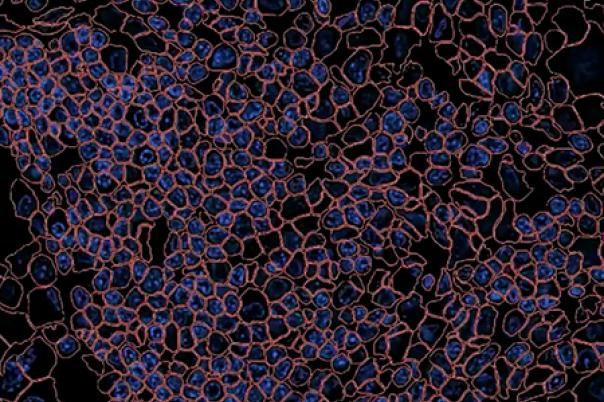
- From the right target to therapeutic impact (AstraZeneca): how microcavity plates, CRISPR and AI imaging surfaced a threefold efficacy signal in a KRAS combination.
- Scaling the unscalable (Wellcome Sanger Institute): automating hair-bearing skin organoids that take up to five months to grow.
- One workflow, every scale (Leica Microsystems): matching the imaging system to the question, including single-objective light-sheet and label-free chemical imaging.
- Panel discussion: adoption, imaging and AI: what regulators still need, how to design an imaging strategy, and why AI needs supervision.
Speakers:
- Luigi Aloia, Associate Director, Functional Genomics & Discovery Sciences, AstraZeneca
- Maryna Panamarova, Cellular Modelling Specialist, Cellular Operations, Wellcome Sanger Institute
- Andrea Boni, Market Segment Director, Human-Relevant Models, Leica Microsystems
- Paul McCormick (host), Advanced Workflow Manager, Leica Microsystems