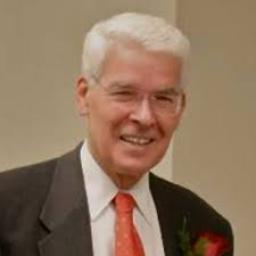
Executive Interview with David Loynd, EnduRx Pharmaceuticals
Format: 19 minute interview
0:03
Hi, everybody and thank you for joining us today.
0:06
I will be interviewing David Lloyd, the CEO of Endurex Pharmaceuticals, a company with expertise in peptide directed drug delivery platforms with a focus on tackling challenges in oncology and potentially beyond.
0:21
David will also be giving a presentation at Opt for Global's drug discovery and development event taking place from the 2nd 3rd of October in San Diego.
0:31
So David, thank you for being here.
0:33
Thank you for joining us.
0:35
And I guess to kick things off with the first question, could you explain maybe how as a fitness entrepreneur and biotech, what drew you to the drug delivery space Ndurex and what issue in drug delivery your company is aiming to solve?
0:52
Certainly.
0:53
But first, let me thank you for the opportunity to participate in this.
0:59
So to answer the question, I am, as you said, a business entrepreneur, not a scientist.
1:07
So technically what drew me to it was a bit serendipitous.
1:11
The management of the company moved on to other objectives, but my late wife had been a patient advocate for Dan Van Hoff, who ran the cancer centre at that time here at the University of Arizona in Tucson.
1:28
So I went to Dan and asked him if this project could have legs.
1:33
He agreed it could, and that was the start of things.
1:39
Now what we're trying to address is something that's very familiar to patients especially who are being treated with chemotherapy and that is that the chemotherapeutic agents are highly toxic.
1:54
They're delivered systemically.
1:56
So the chances are almost certain that there are going to be significant off target effects.
2:04
Our objective is to deliver them specifically to the tumour, to the organ or cells that are involved.
2:14
And by doing that both to potentially improve the efficacy by getting a greater concentration of the API in the location that is necessary and also reducing the off target effects, which we typically consider safety, but not least to improve the patient experience.
2:34
Because both during and after treatment, this can be so unpleasant that in clinical trials patients drop out.
2:45
And often after treatment, the patient is left with certainly life changing issues related to the to the treatment in terms of peripheral neuropathy or brain fog or any number of the other long lasting side effects.
3:07
So we have those 3 objectives, improve effectiveness, improve safety and improve patient experience.
3:15
Perfect.
3:15
Thank you very much.
3:16
Yeah, definitely sounds like your company is adopting a patient centric approach, which is something very valuable.
3:22
And last time in our previous conversation, David, we touched on the hype around lipid nano nanoparticles since COVID-19.
3:32
Would you say that the successive LMPS has been exaggerated?
3:39
No, I don't think it's been exaggerated.
3:40
It was an enormous success embodied in the COVID-19 vaccines, and the potential for further use of that transport mechanism is still largely untapped.
3:57
So, you know, I, I, I, I don't think it's hype.
4:01
It's basically learning from that experience that there are opportunities.
4:08
The other, you know, besides LNPS, something else that people are enthusiastic about is antibody drug conjugates.
4:17
And the objective in both of these cases is to improve transport.
4:22
One of the issues with LMPS is that they have not always been focused on if we talk about oncology tumour specific delivery.
4:35
So you know, there can be significant improvements there.
4:40
We we think that we have perhaps a, a better mousetrap and I think you're going to ask me about that.
4:48
Perfect.
4:48
Thank you very much.
4:50
And I guess peptide based delivery is somewhat under explored.
4:54
So what gives you the confidence in its potential and what obstacles remain?
5:02
Well, you're right that it has not achieved the level of visibility that LNPS have after COVID-19 or of antibody drug conjugates.
5:14
At this at this stage, there are limitations to LMP delivery systems and a couple of them that are salient here are drug loading stability, complexity of manufacture and usually the need for cold chain.
5:34
So by moving to a polymeric carrier, we can address each of those issues in, in a, in a manner that we expect improvement.
5:49
Now what's directing the, the, the drug carrier in this case, we're working with peptides.
5:57
And if you look at the antibody drug conjugate model, you, you basically have a biologically active receptor that you're addressing.
6:10
We could have that as well, but we're actually implementing a concept that was developed by Erki Roslati when he was at the Sanford Burnham Institute in San Diego that he termed as being cellular ZIP codes.
6:27
So in this case we're more interested in the location of the receptor rather than what it does.
6:34
And we benefit from a a process that Erki did path breaking work on.
6:45
And that is the peptides once they have bound to the initial locational receptor are proteolytically cleaved to reveal a motif that preferentially binds to another receptor on neuropillin 1.
7:04
And this actually greatly increases penetration into the tissue.
7:10
So the reason that we are focused on this and it's it's still in an early stage of development is that we believe this gives greater control over the location, which is the whole point of delivery.
7:28
The second point obviously is the effectiveness of it.
7:31
And by utilising this Neuropillin 1 related delivery MOA mechanism of action, we get that.
7:42
But there could be receptors for which peptides that do not peptide ligands that do not have this sender motif contained in them.
7:53
And there's no reason why we couldn't use those as well, right?
7:59
Thank you very much for that answer.
8:01
And we also touched on the one of the goals could be to develop and optimise multiple APIs for the platform.
8:13
Could you maybe tell the audience a little bit more about this?
8:18
So we are, of course, a drug delivery play.
8:22
We're pretty well agnostic as to what the APIs are.
8:26
They could be chemotherapeutics, they could be immunotherapeutics, they could be nucleic acid constructs such as siRNA or mRNA, or they could be radio nuclides.
8:37
They the delivery mechanism is just the post office or FedEx to to address and get those APIs to a specific location.
8:51
This, this is not actually something that we are path breaking.
8:58
I would say a company called Bind Therapeutics that was founded by Bob ****** came out of Bob Langer's lab, got quite a lot, quite a got into the clinic basically with what they called, they branded this as something called Accurins.
9:15
And our Chief Science Officer was is very familiar with this because one of his prior experiences was leading the unsuccessful bidder for the bind assets when the company unfortunately declared bankruptcy.
9:35
So this is several, this is quite a number of years ago.
9:41
You know, we are basically still in the process of optimising here and one of the things that we we learned and stop me if I go too far off topic for you is that we have to do this ourselves.
9:54
We have to have an environment where we have a full stack of capabilities all the way from the initial, the initial conjugation chemistry and nanoparticle formation and, and characterization through in vitro and in vivo studies and ultimately into the clinic because we can't do this with CR OS, with CDM OS, they, they basically fragment things and prevent you from the full optimization process and optimization.
10:26
The, the, the reason I stress this is because once you form a nanoparticle, anything you hang on it changes its characteristics.
10:36
So the the process of optimization is hanging stuff on it and putting stuff into it and you need to know what ultimately is going to happen with that and to do the design of experiments necessary to achieve the optimization to make it work.
10:54
And I think that's been one of the significant obstacles in developing peptide directed polymeric nanoparticles in that anybody can make these things in a lab.
11:07
I mean solvent method make them look at them on DLS.
11:12
That's not one thousandth of where you need to go on this.
11:17
So there hasn't really been an appreciation of the challenge of the optimization process, although now that there are some vendors of microfluidic or impinging jet systems with a considerable amount of optimization automation built into them, this becomes somewhat easier if you have the funding to be able to acquire the instruments.
11:47
So it's still a work in progress and we are have engaged in it with the objective of continuing to work on it until we get a you know, clinically useful product.
12:05
Very interesting, interesting insights for sure.
12:08
And I guess touching on partnerships.
12:10
So Ndurex has quite a long standing partnership with the University of Arizona and some others.
12:18
Could you maybe talk a little bit more about what role these partnerships have in advancing your work?
12:26
So as I said, the for several years we operated as a virtual company utilising CDMOS and core facilities at at facilities at universities.
12:43
And as I've just explained, this really did not allow us to optimise the process and we when things went wrong, we could not tell what was going wrong.
12:53
So the opportunity to become an industry occupant at the University of Arizona's Tucson campus was partly because I happened to live in Tucson and I have been aware for the last 26 years of the very capabilities at the university as a Research 1 university.
13:17
So identifying these capabilities throughout the different departments through cores, through collaborations with investigators is part of the process.
13:31
And, and we've, we've put this together right now and what I would call a virtual pharmaceutical company, but the real challenge is going to be to manage these resources effectively for the kind of outcomes that we want.
13:47
And we're pretty confident of being able to do that, benefiting from the calibre of the capabilities and also the the low cost because although as an industry occupant we pay a higher rate for what we require from core facilities, for example, it's nowhere near the cost that it would that we would incur if we tried to set it up ourselves.
14:15
We also benefit a little bit, I think from our fly over location.
14:20
So this will be much more expensive to do on either coast because of the costs of lab space and the difficulty of attracting employees.
14:32
We can benefit from that in the current environment also.
14:37
I call it survivability.
14:39
So you know, we our our needs are not $100 million raises at this point and we can utilise that to generate the kind of data that will start to enable conversations with pharmaceutical companies.
14:59
Obviously we are going to need to work with CDM OS once we optimise our candidates so that scale up and you know, reproducibility and all the CMC issues can be dealt with.
15:13
But you can't do that without the initial optimization and that's what we're doing here at the university.
15:20
Also, it turns out in in Arizona, there are a number of other institutions that we can collaborate with to our mutual benefits.
15:31
So there in addition to what I've just described at the University of Arizona here with its comprehensive cancer centre, the only one in the in the state, there are also facilities in the Phoenix area including an oncology CROT D2, the Translational Genomics Institute, TGEN and several research hospital networks including the IV brain tumour centre, which is probably the leading American research institution for brain tumours.
16:09
So pulling that together is gives us a statewide very powerful asset and there is an inclination to work together here, which is I think encouraging and a little bit unusual.
16:26
If we were in certain areas of the country that should be unnamed, you know there there would be a lot more proprietary concern around some of these things.
16:39
But the opportunity to work together here, we still obviously need to put Cdas in place etcetera, but different put it that way and I think useful to us, very insightful.
16:57
Unfortunately, we only have time for one more question.
17:00
So I guess, David, my final question to you is, are there any upcoming milestones that you are focused on at the moment that you would like to share with the audience?
17:14
So what we're doing right now is actually a fairly simple proof of concept in in the lab where we are working to demonstrate that our peptide directed nanoparticles can provide better tumour specific delivery and fewer off target effects than two approved compounds, one being Abraxane, which is that paclitaxel and the other being Genexo.
17:49
So both of these present themselves as nanoparticles, but in both cases they aren't once they enter the bloodstream.
17:59
We believe that that proof of concept data will be useful.
18:04
Opening up conversations with pharma companies.
18:07
It's simple, it's easy to understand, you know, there are not the number of moving parts that perhaps we could get into with a more sophisticated demonstration.
18:17
And so we're looking forward to being able to present that data to pharma companies later this year.
18:25
Perfect.
18:26
Thank you very much.
18:27
Thank you, David, for sharing your latest work and perspectives with us.
18:32
Very interesting indeed.
18:33
I mean, I wish we could go on and talk more, but you can hear more from David at Oxford Global's Drug Discovery and Development event, which, as I said, is taking place in October in San Diego.
18:46
So for full details and registration, please for the Oxford Global's event page.
18:51
And David, thank you for joining us, and we look forward to your presentation.
18:56
Thank you.
18:57
Thank you.