Executive Interview with Joshua Baughman, Bristol Myers Squibb
Format: 17 minute interview
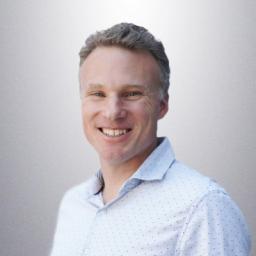
[0:02] Hi everyone and welcome today. We are joined by Josh Baughman, a scientific director at Bristol Myers Squibb, where he leads a team of scientists working on early target discovery in the protein degrade space.
So welcome Josh and thank you for joining us today. And I guess first question from me is could you tell the audience briefly about your role at BMS and the areas of interest in the drug discovery space.
[0:31] Absolutely, thanks for having me. It's a real pleasure to be here to discuss our work. My name again is Joshua Baughman, and I'm a scientific director at BMS, Bristol, Myers, Squibb and my team is part of BMS protein homeostasis center, and what we're trying to do at that center is bring targeted protein degradation therapeutics to patients for a therapeutic benefit, and we carry programs all the way from their early discovery stages, from conception through to early clinical development.
Now I figured that not everybody in the audience may be an expert in protein degraders, and so I did want to just take one minute to explain what that means for protein targeted protein degradation.
We're harnessing the cell's own degradation machinery with things like E3 ubiquitin ligases to degrade therapeutically relevant protein targets. And one of the ways, out of multiple ways that we're trying to do this, but one of the ways is we're using these Cereblon E3 modulating drugs, or as I'll be referring to them, as cell mods. And these cell mods are small molecules, and they work by first binding to this E3 ubiquitin ligase, cerebral, and this creates a new molecular interface that's then able to recruit in new substrates.
These are proteins that cerebral doesn't normally degrade in its normal course of action, but because of this interface, it can recruit these Neo substrates in we call this interface kind of a glue interface, so it glues these new targets in there, and hopefully some of those targets will have some therapeutic benefit. Cereblon is able to ubiquitinate those targets and subsequently degrade them.
What we're finding is that, over the years, we're able to degrade quite specifically and potently multiple protein substrates now. And what's really cool about that is a lot of these proteins don't have traditional druggable pockets because of this new interface that we're building.
They don't need that deep pocket for small molecules anymore. And so we're able to branch out into the space of the proteome that we weren't able to drug before. And so we think that this is really exciting times for the field.
[2:44] Thank you very much. BMS has achieved an important breakthrough with its cell mode, protein kinase degrader. Could you maybe expand a bit more on what scientific breakthroughs and learnings came from this project?
[3:00] Absolutely. Now what you're referring to there is our we one protein kinase degrader, and I think we have to realize at this point that we're still in very early stages for our we want to greater but we are quite excited that it represents one of our first cell mod protein degraders to enter clinical trials for solid tumours. And I think to understand maybe the significance of that and potential of that asset, we have to step back and talk a little bit about we one biology.
So we one is a master regulator of the cell cycle. It's a kinase, and it's actually an inhibitory kinase. So what it does is, when it's active, it slows down the cell cycle. And a person might ask, okay, well, why would a tumour cell ever want to slow down its cell cycle? And it turns out that one hallmark of tumours and cancer in general, is genomic instability and replication stress, on one hand, that helps the tumour mutate proteins and turn them into onco proteins that drive tumour genesis.
But on the other hand, if you accumulate too much DNA damage, well then you just undergo cell death. And so tumours have to find this balance, and we one is, is part of that balance, and we think that's what we makes we one, a great target for oncology. And in fact, there are we one inhibitors in early phase clinical trials, and they've been showing some successes in solid tumours such as ovarian cancer in utero serous carcinomas, which are known for their genomic instability and high replication stress. So some pretty nice clinical proof of concept there.
Now with our we one degrader, where this is BMS, 986463, that I'll be presenting on. It's a highly selective and very potent molecular glue degrader of we one, and we hope that helps differentiate it in the clinic. We've demonstrated really robust tumor efficacy and preclinical tumor models, including patient derived preclinical tumor models in vivo.
So that was really nice to see. And what we're also seeing is a really nice correlation between that pre clinical tumor efficacy with the deep and durable, we want degradation, and we do hope that that translates into the clinic also.
[5:27] That's great. Thank you very much. And BMS, I believe is also keen to focus on the potential of molecular glues in the solid tumour space. So how are you and your team approaching this, and I assume there'll be some challenges along the way. Could you outline some of the ones that you anticipate?
Yeah, absolutely. So one of the things that is interesting about protein degraders is, as I said, that we're breaking into this new target space. We think that we're expanding the number of proteins that we can drug with small molecules. But with that comes particular challenges, and one of those challenges is, well, if you're expanding to so many targets, how do you know you're putting your resources on the right target to really provide that therapeutic benefit for patients.
So we have to make the right choices and invest in the right places. And so with that, it kind of brings us to this broader question, and BMS has these research and development principles that we've been following to help guide us to selecting the right target for protein degradation, and those three principles, at least in the early discovery phases, are we need strong links to causal human biology.
We need to match that modality to the mechanism of the disease biology. And then we need to have a really clear and defined path to clinical, clinical proof of concept.
So, you know, the first the first one is, is kind of easy to understand. We need to understand our disease. We need to know what drives that disease biology in human beings. And so if our target, we're going to give more weight to targets that are causally linked to disease, maybe in their mutated in cancers, or maybe they already have some drug that is targeting them in human patients and showing some response, or even just that general pathway that we're going on.
In addition to that, we like to analyse patient data and look at patient derived models. Anything that gets us closer to the patient's disease biology is going to make for a better targeted protein degradation target. The next one is matching modality to mechanism. We live in this era where we're very lucky.
We have a lot of modalities to choose from in order to target disease biology. So, we have degraders, but we also still have small molecule inhibitors. We have T cell engagers, we have antibodies, we have ADCs, and we need to figure out which one's the best one for the disease. So we think a lot about whether the degrader is the right approach. So, for instance, if we're going after things like a transcription factor, where we don't really know any other way besides a degrader that that really matches the modality to the mechanism, then the degrader is the right approach.
And then finally, our ultimate goal, of course, is to benefit patients in the clinic. And so even from the early concept stages, we look ahead into the clinic. We're working with our clinicians. We're asking, Hey, what is that right patient population? How are we going to test our hypotheses in the clinic? And if there isn't a clear way, even though you might even have that causal human biology, but if there isn't a clear way to test in the clinic, whether this thing's going to work well, then we're going to down weight it in the target spectrum.
So take that all together with our multidisciplinary approach at BMS, a lot of experts spanning from early chemistry all the way through the clinic, all working together, and we're making these nice ranked lists. And so that's how we are overcoming this, this challenge of this expanded scope that we can go now in drug development.
[9:29] Thank you very much. And a lot of BMS is successful. Programs were developed before the AI/ML boom. So, what are discovery strategies and tools were the most effective for degrade optimisation at BMS during this pre AI/ML phase.
[9:49] Yeah, I love that question, because BMS has so much history in the degrader space, and in fact, we were one of the only companies that has it. FDA approved degraders and because of that, you know, some of our programs were developed even before the degrader boom, if you will, before these molecular glues.
We found them via phenotypic screening, and we didn't even know that they were degraders yet. Actually, that we found that out later, but now in 2025 were actually quite sophisticated. We have a variety of optimised, high throughput screening strategies to screen for degraders for our particular targets of interest.
For instance, we use hi-bit tag screening a lot to get into the specifics. This is a little tag you can put on the end of your target proteins, and you can monitor it by luminescence. And we really love this thing because you can do it in very large-scale screenings. And 1536, well plates, we can screen through our library quite rapidly.
In addition to that, we have a number of other screening technologies that we've developed in house, and we're applying on a consistent basis. In addition to that, proteomics has made significant progress over the last 10 to 15 years, both in throughput, in the scale of the proteome that you can look at so in a currently with our proteomics experiments in our platform, we can easily monitor 8000 to 10,000 protein abundance measurements at a time, and, you know, medium throughput, and get at what our cell bonds are actually degrading in the proteome. So this is hugely advantageous for our projects.
And then finally, I would say a technique we heavily rely on that is just really cool, is cryo-EM. So there's nothing like getting that full ternary complex of your protein degradation machinery, Cereblon, your molecular glue. And this the molecular glue interface that cell mod and then the target protein sitting on top.
cryo-EM now allows us to get these high resolution structures our chemists use that routinely to build and optimise our compounds, trying to optimise for potency and selectivity and it's really incredible what we can do in 2025.
[12:18] Thank you very much. And you mentioned that your FDA approved degrader, so I guess, how has this success influenced the way you and your company think about the future of targeted protein degradation?
[12:35] That's a good question. Having that marketed product has gifted us with experience. We've had time to learn about our mechanism. We've had time to build out our Cereblon based molecular glue cell mod library. We also have had a lot of clinical experience, and I believe we're a little bit more confident than pushing forward cell mod degraders into the clinic, but we've also increased our confidence in branching out into other spaces of protein degradation, and I think that's one of the most important things. You know, cell mod molecular glues and these Cereblon based methods aren't the only ways that we're going after targeted protein degradation.
So we've had the confidence to stretch in and branch into some of these new areas. One of those areas is ligand directed degraders. So these unlike molecular glues, which build that that protein, protein interface, and don't require the druggable pocket. This modality still requires that druggable pocket. It's a little more blunt in nature. So that one we're going to say, create a binder to the E3 ligase Cereblon. We're going to make a little linker, and we're going to create a binder to a target of interest. Now, that target of interest needs that druggable pocket now, but essentially, we're going to bring still that protein into cerebral on for protein degradation. You can use other E3 ligase for this modality also.
And we do have one asset in late-stage clinical trials in solid tumours for that also. So really interested to see how that turns out. And then, um, kind of more advanced. There we're starting to branch into what we're calling DAX, or degrader antibody conjugates. This is basically putting one of our small molecule degraders onto an antibody. And what we're hoping to do here is expand the universe of payloads that we can use for antibody drug conjugates so very early days on that avenue.
[14:50] Perfect. Definitely seems like an exciting time for you and your company. And I guess final question from me, Joshua is, so obviously we're very excited to host you at Oxford Global's Discovery and Development conference, where you will be presenting on molecular glue optimisation. What is the one key takeaway message you would like to leave the audience with?
Sure, absolutely, I'll just reiterate that we're really excited to bring molecular glue, cell mod degraders into clinical trials for solid tumours. Our we one degrader represents one of our first endeavours in that space. But we're also excited about where we can go with cell mod molecular glue degraders. That space of substrates is expanding rapidly. I'm interested in substrates such as transcription factors, linear specific transcription factors, these real nodes of disease.
You know, each transcription factor can regulate hundreds to 1000s of genes, and with a protein degrader, we can take out that node in, you know, disease biology and really have more effect on the disease, but transcription factors were always considered kind of undruggable, and I think with the graders, we have this chance to break into that new space and really affect disease in new ways.
You know, I hope also a main takeaway here is we're at the beginning of maybe making the term undruggable kind of passe, and I do hope that we see that going forward, so still nascent field, still learning a lot, and that's why it's really important to have conferences like Discovery and Development going forward, where we can share our stories and experiences.
[16:47] That's great. Thank you very much, Joshua, and that's everything from me. So, thank you for sharing your insights with us today. We very much look forward to welcoming you, welcoming you at the conference in October. Thank you very much.
[17:01] Okay, thanks so much for having me.