At Drug Discovery EU 2026, Yann Gaston-Mathé, CEO of Iktos, highlights how generative AI is reshaping small molecule drug discovery. Iktos leverages proprietary AI technologies to design molecules that are not only effective but also readily synthesizable, addressing a key bottleneck in traditional drug discovery.
Central to Iktos’ approach is a closed-loop platform that connects AI-driven design with robotic lab automation. This integration allows rapid synthesis and testing of compounds, significantly improving speed, scalability, and efficiency compared to conventional methods.
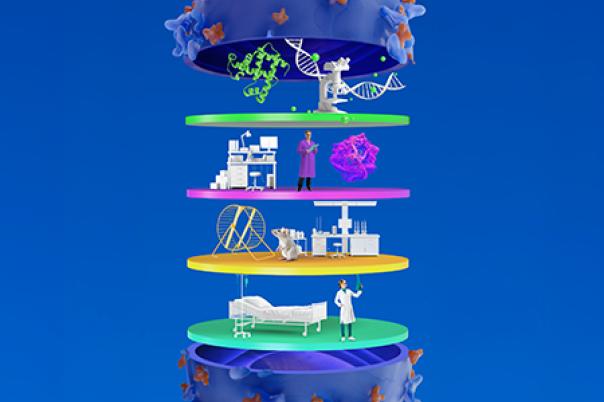
Gaston-Mathé emphasizes that AI’s impact spans the entire drug discovery pipeline—from target identification to lead optimization—but Iktos focuses specifically on solving complex challenges like protein–protein interactions, where unmet medical needs remain high.
Despite its promise, integrating AI into pharma workflows is not straightforward. The industry still relies heavily on human expertise and intuition, making adoption as much a cultural shift as a technical one. Iktos addresses this by building user-friendly tools that enable chemists to use AI without requiring programming skills.
Looking ahead, Gaston-Mathé points to the rise of large language models (LLMs) and agentic AI as the next major leap. These technologies could orchestrate specialized AI systems and automated labs, transforming how scientists design, test, and optimize drugs.
Ultimately, the future of drug discovery lies in combining AI, automation, and human expertise—unlocking faster, more efficient pathways to breakthrough therapies.